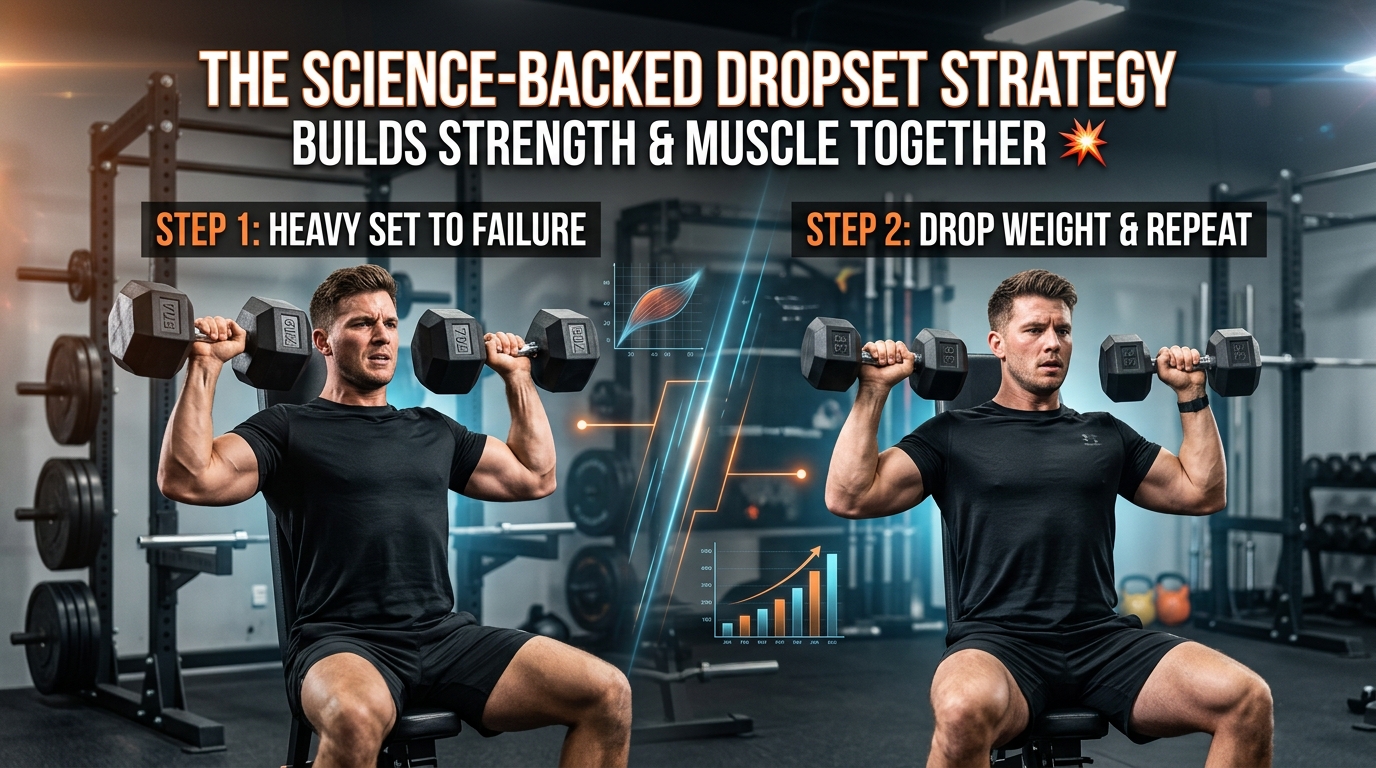
If you want to build strength and muscle at the same time, dropsets can be one of the most effective training methods available. This advanced technique pushes muscles beyond normal fatigue, helping stimulate greater muscle growth while improving workout intensity.
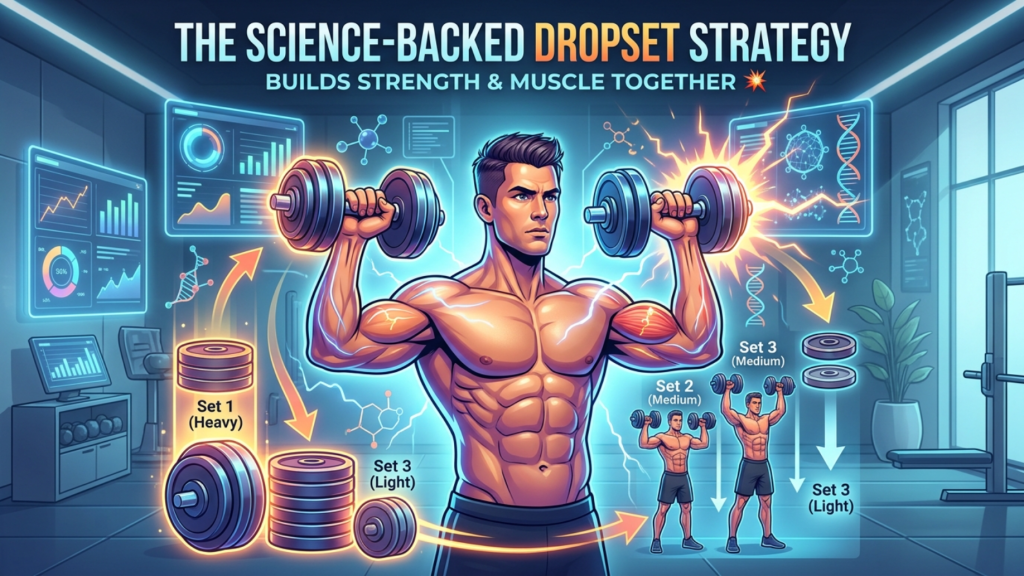
But not all dropsets are effective. Using the right strategy is what separates smart training from simply exhausting yourself. In this guide, we’ll break down the science-backed dropset method that can help maximize both hypertrophy and strength gains.
Table of Contents
- What Is a Dropset?
- How Dropsets Build Muscle and Strength
- The Science-Backed Dropset Strategy
- Best Exercises for Dropsets
- Common Mistakes to Avoid
- Advantages
- Disadvantages
- FAQs
- Conclusion
What Is a Dropset?
A dropset is a resistance training technique where you perform an exercise until near failure, then immediately reduce the weight and continue doing more repetitions without resting.
This method increases training volume, muscle fatigue, and time under tension — all important factors for muscle growth.
Example:
- Bench Press: 80kg × 8 reps
- Immediately reduce to 60kg × 10 reps
- Reduce again to 40kg × 12 reps
This sequence counts as one dropset.
How Dropsets Build Muscle and Strength
Dropsets work because they create a high level of metabolic stress and muscle fiber recruitment.
Research suggests that combining heavy resistance with extended fatigue can stimulate:
- Muscle hypertrophy (size growth)
- Increased muscular endurance
- Greater muscle fiber activation
While traditional heavy lifting remains important for maximum strength, strategic dropsets can complement strength training by increasing overall workload and muscle adaptation.
The Science-Backed Dropset Strategy
1. Start Heavy First


7
Begin with a weight you can lift for 4–6 reps with good form. This helps activate high-threshold muscle fibers associated with strength.
2. Reduce Weight by 20–30%


7
Immediately decrease the load by about 20–30% and continue the set without resting.
This maintains intensity while increasing muscle fatigue.
3. Perform Higher Reps After the Drop


7
After lowering the weight, aim for 8–15 reps to maximize hypertrophy and muscle pump.
4. Limit Dropsets to Key Exercises


6
Dropsets work best on:
- Machine exercises
- Dumbbell movements
- Isolation exercises
Avoid excessive dropsets on highly technical compound lifts like deadlifts.
5. Use Dropsets Strategically


6
For best results:
- Use dropsets on the final set of an exercise
- Limit to 1–3 dropsets per workout
- Allow proper recovery between sessions
Too many dropsets can increase fatigue and hurt recovery.
Best Exercises for Dropsets
Some exercises respond especially well to dropset training:
- Dumbbell curls
- Leg extensions
- Lateral raises
- Chest press machines
- Cable pushdowns
- Leg presses
- Seated rows
These exercises are safer for extended fatigue training.
Common Mistakes to Avoid
❌ Using dropsets on every exercise
❌ Sacrificing form for extra reps
❌ Dropping weight too drastically
❌ Overtraining without enough recovery
❌ Using dropsets every workout
Advantages
✔ Increases workout intensity
✔ Builds muscle efficiently
✔ Saves training time
✔ Creates powerful muscle pump
✔ Helps break training plateaus
Disadvantages
❌ Extremely fatiguing
❌ Recovery demands can increase
❌ Not ideal for beginners
❌ Poor form may increase injury risk
FAQs
Are dropsets good for strength?
Dropsets mainly support hypertrophy, but when combined with heavy training, they can help improve overall strength development.
How often should I use dropsets?
Most people benefit from using them 1–2 times per muscle group each week.
Can beginners do dropsets?
Beginners should first focus on mastering proper form and basic progressive overload before adding advanced intensity techniques.
Do dropsets burn more calories?
Yes, because they increase workout density and overall effort.
Conclusion
The right dropset strategy can be a powerful tool for building both muscle and strength. By combining heavy loading with controlled fatigue, dropsets create a unique training stimulus that pushes muscles beyond normal limits.
Use them wisely, focus on proper recovery, and you’ll unlock greater gains in less time 🔥